
Packaged tea consumption in India has been under pressure due to inflation across the consumption basket coupled with higher tea prices. This is forcing tea drinkers to downtrade, especially in rural areas. Milk prices have also gone up and this has impacted tea consumption along with delayed winters in the north, companies have said. NIQ (formerly known as NielsenIQ) data shows that the packaged tea category grew around 4 per cent in value and volume terms in 2022 compared to 2021.

Demand for fast-moving consumer goods (FMCGs) went up last month across India, as kirana stores stocked up their shelves in anticipation of a sizzling summer, according to data by retail intelligence firm Bizom. There was a spike in beverages sales across the country despite inflation inching up in February after moderating downward previously, Bizom noted.

'When we were thinking of 'Rise Up Baby' and celebs who can stand for that, Ranveer is someone we felt completely embodies the brand philosophy and the spirit of 'Rise Up, Baby' because he is irrepressible and cannot be contained.'

IPO-bound hospitality major OYO has written to the Ministry of Tourism (MoT) requesting it to intervene and investigate the running of the Federation of Hotel and Restaurant Associations of India (FHRAI) and order eviction of erring executive committee members. The hotel aggregator urged the MoT to take necessary action against FHRAI's "illegally run" Executive Committee and its members who are working for self-interest instead of that of small hotel owners. The representation by OYO alleged that FHRAI's actions are detrimental to small hotel owners.

The writing has been on the wall for some time and it showed up prominently during the festival-season sales last year, when Meesho toppled Amazon to become the second-largest player in order share. During the sales season, 60 per cent of the orders Meesho received were from tier-4 cities and beyond. According to a report by consulting firm Redseer, festival-season sales last year were driven primarily by tier-2 and tier-3 cities, with 64 per cent of the shoppers coming from those.
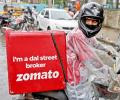
Key drivers of profitability for Zomato has not witnessed remarkable growth, the management believes the venture will turn profitable in the long term.

India added over 1,300 active tech start-ups to its ecosystem in calendar year 2022, taking the total tally to between 25,000-27,000, according to a recent report. The country continues to be the world's third largest tech start-up ecosystem. The Nasscom-Zinnov Indian Tech Start-up Landscape Report 2022 found that India added the second highest number of Unicorns - companies with a valuation of at least $1 billion - in the world, with over 23 added in CY2022.
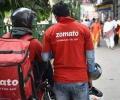
Food aggregator platform Zomato has discontinued its 10-minute delivery offering, Zomato Instant, as the business has struggled to grow and faces challenges in turning profitable, media reports said. The company has denied these claims, stating that the business is just being rebranded. This comes as the company's CEO Deepinder Goyal announced 800 job vacancies across 5 roles via a Linkedin post.

Fast-moving consumer goods (FMCG) sales in rural areas witnessed a sequential recovery in the latter half of December, according to data by retail intelligence firm Bizom. Also, demand witnessed in the previous month compared to November was higher from tier-3 cities than mega cities. Overall demand from rural areas declined 0.2 per cent on a month-on-month basis in December while it was down 17 per cent in November, according to Bizom's data.

The Bureau of Indian Standards (BIS) will engage stakeholders in the e-commerce space to establish standards with the objective of self-regulation, said its deputy director Parul Gupta at the Internet Commerce Summit 2022 in Bengaluru. "Standardisation will allow parties to transact qualified commodities and services at any location and time," said Gupta. BIS recently released standards for e-commerce players, travel portals, and food delivery platforms that publish consumer reviews online, as part of the government's efforts to crack down on fake reviews, said Gupta.

Lakme, India's first make-up and beauty brand, turned 70 this year and is also present in Hindustan Unilever's club of brands with a turnover of over Rs 1,000 crore. Over the past seven decades, the brand has evolved and is no longer just a beauty brand, but has also transformed into a skincare brand. Lakme has increased its digital presence as well as innovations and now sees a third of its growth come from new innovations.

The pharmaceutical and the consumer durables sectors, which depend on China for imports, have not been impacted yet due to unrest in China with people protesting against lockdowns. But the lockdown could have an impact on the supply of components used in consumer durables if it continues for the next fortnight. In the pharmaceutical industry, Indian players import 66-70 per cent of their bulk drug requirements from China.

'It's a big technology company and may offer good remuneration, but stability in my career is equally important to me.'

It is the season of cooking and baking, but with Amul Butter in short supply, consumers aren't like the cat that got the cream. A shortage only means market shelves without butter on them. "There is a supply-side deficit. "We are now able to procure only two packs of butter a day, as opposed to three packs (each containing 30 packets of butter) in a day," says a salesman at Modern Bazaar, a departmental store in New Delhi's Greater Kailash.

With the fashion world blurring the lines between innovation, technology and reality, shopping is all set to be revolutionised.

If you are a budding developer and interested in Web3, chances are that you will be headed to one of India's largest-ever meetings of Web3 developers, being held by Polygon, a Web3 platform. The company's ongoing "Web3: Made in India Tour" is expected to see close to 4,000 developers coming together at the inaugural Polygon Connect event in Bengaluru on December 1. The event highlights the growing dominance of Web3 developers from India, as well as the sector's rising interest to investors, who continue to invest in startups despite a funds crunch.

With the festival sales in full swing, e-commerce firms are ramping up hiring to meet the increasing consumer demand. Close to 300,000 new jobs have been created in the sector so far and over 500,000 more jobs are expected to be added till Diwali, according to a report by TeamLease. The demand for gig workers is, however, not restricted to tier-1 cities. Tier-2 and tier-3 cities have seen an increase of 40 per cent, with a higher demand for delivery workers, according to a TeamLease report.

Hindustan Unilever (HUL), one of the country's largest fast-moving consumer goods (FMCG) players, is learnt to have cut prices of its leading soaps and detergents this month by 2-19 per cent, according to the company's distributors. The cuts come after consistent price increases by the company as well as its peers, following the sharp rise in raw material prices in the past several months. It is only recently that prices of raw materials have started to correct from peak levels in the June quarter.

Feeble demand in rural areas of the country has affected sales of fast-moving consumer goods (FMCG) in September as compared to August, which saw heavy stocking ahead of the festival season, according to the data of Bizom, a retail intelligence platform. Sales in rural India fell 14.3 per cent while urban sales growth stood at 1.1 per cent in September as compared to the previous month. Overall FMCG sales fell by 9.6 per cent in September as compared to August.

Flipkart claims that over one billion customers visited its platform during the eight-day-long The Big Billion Festival. Amazon's Great Indian Festival 2022, which will go on for a month, is throwing discounts at customers that can hardly be ignored. But some of the stories that are coming out from these sales are not so great.
 © 2026 Rediff.com - Advertise with us - Disclaimer - Privacy Policy - Sitemap - Feedback - About us - Terms of use - Grievances